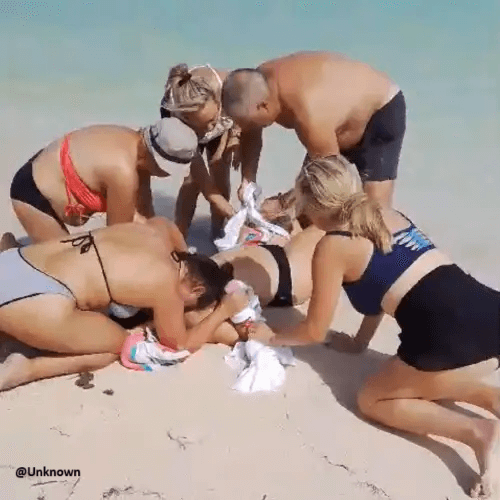
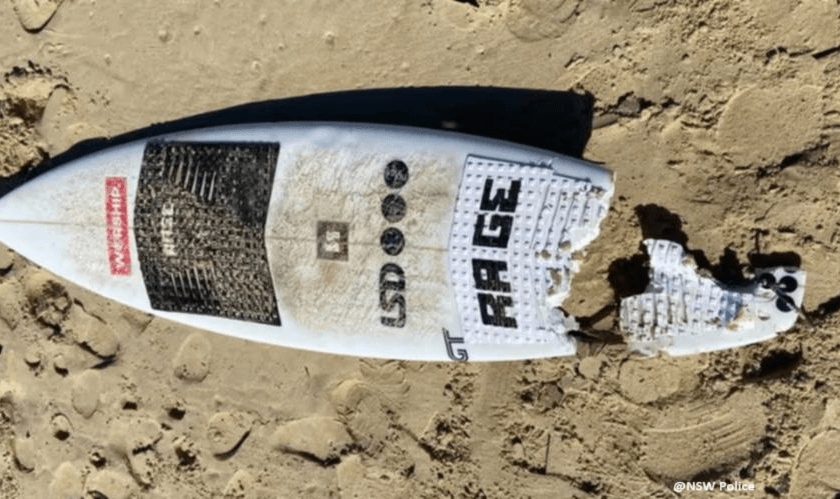
An unidentified employee of a Navy installation in Panama City, Florida, was critically injured after a suspected bull shark attack while swimming near the base on June 8, 2026.
The man was swimming with a friend in the waters near the installation shortly before 11:45 a.m. when the attack occurred. According to reports, the swimmer was approximately 50 yards offshore when he was bitten.
While individuals are known to enter the water in the area, warning signs reportedly state that it is not a designated swimming zone and that the waters are not monitored by lifeguards.
Video from the scene captured a terrifying moment as the victim struggled in the water while several fins could be seen breaking the surface. Witnesses could be heard screaming for help as the incident unfolded.
A woman, who witnessed the attack called 911, while her grandfather helped the man out of the water. Unfortunately, the man’s arm had been degloved and only bone was visible.
Authorities were notified and NSA Panama City Fire and Rescue responded to the scene, transporting the injured employee to HCA Florida Gulf Coast Hospital.
The victim underwent emergency surgery at HCA Florida Gulf Coast Hospital before being transferred in critical condition to another medical facility.
A second video recorded after the incident appeared to show a shark swimming near the Hathaway Bridge area as it moved away from the scene. Unconfirmed reports have also suggested that a fisherman may have discarded fish remains into the water before leaving the area, potentially attracting sharks. Officials have not confirmed whether this played any role in the attack.
The incident marks the second shark bite reported in the Panama City area within a matter of days.
On June 5, an unidentified angler was bitten while fishing after reportedly catching a bull shark. The bite is considered a provoked incident, and the man was transported to a local hospital with non-life-threatening injuries.
The area has experienced other recent bull shark encounters. In September 2025, spearfisher Chance Armand was bitten while diving near Pensacola Pass with several visiting friends and family members.
Armand, an experienced fisherman and diver, allowed his friends to enter the water first. After they spotted an approximately 8-foot bull shark, he reassured them that seeing sharks in the area was common and there was no reason to panic.
During his first dive of the day, Armand shot a fish and quickly pulled the struggling catch against his body. Moments later, he looked down and saw the bull shark approaching from below.
Armand placed his knee between himself and the shark as it lunged, and the shark bit down before quickly releasing him.
Following the attack, Armand said he had no plans to stop spearfishing but would begin carrying an individual first aid kit equipped with a tourniquet during future dives.
The Panama City attack also serves as a reminder of one of Florida’s most unusual days of shark activity.
On June 7, 2024, three people were bitten in two separate shark attacks in Walton County, approximately 50 to 60 miles west of Panama City.
The first attack occurred around 1:20 p.m. near Watersound Beach. Elisabeth Foley, 45, was swimming with her husband just beyond the first sandbar when a shark attacked, severely injuring her left hand, abdomen, and buttocks.
Her husband assisted her back to shore, where she received emergency first aid before being transported to HCA Fort Walton-Destin Hospital in critical condition. She ultimately lost her hand due to her injuries.
Approximately 90 minutes later and about four miles away near Rosemary Beach, a group of teenagers were searching for sand dollars when another shark attack occurred. Investigators believe it is possible the same shark was involved.
Alabama teenagers Lulu Gribbin, 15, and McCray Faust, 17, were in the water when the shark struck. Gribbin suffered catastrophic injuries, losing her left hand and requiring the amputation of her right leg above the knee. Faust suffered non-life-threatening injuries.
All locations have been marked on the 2026 Shark Attack Map